
The sequence I’m about to show comes from one of the spin-off movies of the Harry Potter saga. I’m not a big fan of Harry Potter, but in this case, I feel there is something worth observing.
Ever since when I first watched this film, I have had the feeling that this gigantic, ominous and dark CGI creature can be a useful visual metaphor to conceptualize the spatial dynamics of affect. Emotions, as is today broadly understood across various fields of knowledge, are not the private, inner affairs of subjects, but rather spatialized forces that can “jump” from one subject to the other, capturing them and influencing their individual affective states. While they do “extend” into the ambient environment, emotions lack a precise geometrical definition, as the Harry Potter monster quite strikingly shows us. The spatial nature of emotions is not restricted to “destructive” affects such as hate or fear, but the purely incidental quality of this monster, its reckless violence and uncontrollability, creates an interesting conceptual bridge to the strong affective resonance we may encounter and experience in protests. We are observing something that resembles, albeit in a metaphorical way, that equally strange “creature” that was Sigfried Kracauer’s “revolting mass,” as he often encountered in the streets of Berlin in the years that would lead up to the rise of Nazism.1
In this short presentation, I will thus address three distinct issues: firstly, I will review some of the many theories postulating the externality of emotions, plotting how this spatial dimension unfolds within the urban environment; secondly, I will clarify how protest, as a specific urban practice, fully harnesses this spatial dimension to sustain its deployment; finally, I will discuss how a form of landscape – something akin to what has been so far here thematized as a landscape of protest – represents an emergent condition that is fueled by the interplay between urban space and human action.
The Transmission of Affect
The transmission of affect is a matter of fact: we are all affected by what happens around us, by the moods and attitudes of the human and non-human subjects we encounter. As Max Scheler formulated, affects spread like contagion: we feel together (Miteinanderfühlen),2 and “[I]f different people are jointly affected by the same feeling and they become aware of this, then […] the corporeal dynamic is aligned because the impulse comes from a single feeling”3: they become “synchronized” in a corporeal way. Now how does this synchronization occur? Several parallel theories can help us clarify this process.
In one of the most influential works on the subject, philosopher and psychoanalyst Teresa Brennan clearly claims that “the person is not affectively contained,”4 and that the transmission of affect means “that the emotions or affects of one person, and the enhancing or depressing energies these affects entail, can enter into another.”5 What this implies in practice is a dense network of subtle physical changes the body experiences at the biochemical and electrochemical level, which we eventually may sense and describe as feelings. In Brennan’s view, science explains that “[t]he form of transmission whereby people become alike is a process whereby one person’s or one group’s nervous and hormonal systems are brought into alignment with another’s. Neurologists call the process ‘entrainment’.”6 We may thus smell another person’s affective state, his or her condition of depression, well before we enter in conversation.
A different channel of interaction if the one postulated by philosopher Hermann Schmitz, whose central focus relates to the dynamics of corporeal communication. Extending the tradition of early phenomenology, Schmitz distinguishes between the physical, “medical” body, and a dynamic entity that extends beyond the carnal boundaries of the subject – the lived body. How the subjects’ bodies interact is a matter of gestaltic figures: the way subjects move or appear to move, the gestures and postures that are expressive of moods and emotions.7 This “encorporation” between two or more bodies can occur in many different ways: it can be solidaristic – as when a battalion marches in perfect unison – or antagonistic, as in the case of a battle, where the enemies study each other’s movements to remain out of harm’s way. In either case, the lived bodies acquire a shared form of emotion, which may be called “interaffectivity”: “[interaffectivity] is the encompassing sphere in which our emotional life is embedded from birth on. This sphere has its centre in the lived body: through its affectability and resonance it mediates our participation in a shared space of affective attunement.”8
“Resonance” is a key term in the third, rather striking paradigm that is emerging as a dominant model in the human sciences, as set forth by German sociologist Hartmuth Rosa.9 The concept has an origin in music and in the natural sciences, and can be explained as the interaction between forces that eventually leads to a common movement – for example, when a crystal vibrates to the soundwaves generated by a human voice. Yet Rosa explains this process in a different way: resonance occurs when two or more entities share the same space, and when their actions mutually affect each other. While the forces exerted by each entity may be asymmetrical – some stronger, some weaker – in the end all participating entities both exert and receive, in a reciprocal interaction whose logic may not be entirely visible and discernible. Rosa refers to a popular scientific experiment with metronomes as a visual metaphor of the dynamics of resonance:
To summarize, while these three – among many others – prominent theories each identify a salient trait, there are some key notions that appear to be shared by all, such as:
- Affects are not contained within the individual, but take up a spatial form
- Affects can be transmitted only between entities sharing the same space
- The transmission occurs through the subjects’ bodies
Protest as a Shared Corporeal Practice
The question, at this point, becomes the following: how does protest, as a specific corporeal practice, leverage on the dynamics of affective transmission? How does the space of the city factor into the equation?

Centrally, we must acknowledge how the space of the city establishes an arena for collective emotions. While pragmatist-materialist histories may claim that cities were first founded because it made sense in economical terms to have many people living together, the truth could in fact be that larger communities would serve as “amplifiers” of emotions. We may be accustomed to considering this a form of disturbance, the irruption of “unwanted” emotions into a pacified (if not altogether sedated) space. Such could be the impression we derive from observing a dramatic urban scene like Umberto Boccioni’s Brawl in the Gallery from 1910, where the “mass” – not unlike Sigfried Kracauer’s – loses its form, as the bodies melt into a single, blurred and moving conflagration that resembles the Harry Potter monster. Yes: the space of cities can be menacing and threatening, depending on which side of the boundary you find yourself on.
But there is more to the city that only violence: some emotions – and one could claim that especially the most powerful ones are such – are best enjoyed together, in crowds. Sportswriter Louisa Thomas, for example, keenly observes that spectator sports become a “gigantic arena for feeling”. Here, the “emotional pressure” that people – especially young males – experience can be collectively released, and the resulting shared experience, while not altogether devoid of a certain degree of violence, still poses a better alternative than letting the “pressure off” on other, less controlled occasions. The canonical choreographies of sports spectatorship – choral chanting, synchronized movement, sudden bursts of joy or grief – play out at a corporeal level, and the joy of seeing one’s team winning is strongly enhanced by the crowd’s atmosphere of energy. In purely visual terms, a football match is best seen at home, where the television screen offers accurately directed close up views and expert commentary: but the broad reciprocal encorporation one encounters in the stadium easily surpasses the clinical pleasure of viewing-at-home.

Sports are but one among many urban practices that “amplify” emotions: protest is another. Protest can be spontaneous or accurately planned; it can be moving or remain in place; it can occur in large or small groups, but it is hardly ever limited to single individuals. Protest, by definition, is a collective engagement leveraging on ideas and beliefs, on the articulation of disappointment, dissent, anger or rage: but its practice goes well beyond what can expressed in words, harnessing the lived body’s capacity of “resonating” when amidst groups and crowds. In other words, it is not enough to protest: it is necessary to protest together, exposing oneself to the resonance afforded by the presence of the crowd.
The choreographies of protest, the forms of movements these entail, are telling of the shared emotional response to the spatialized affects.
A crowd that is captured by panic – a situation that terrorist attacks have unfortunately brought us to familiarize with – will lose its composure in a matter of seconds, initiating a common, frenzied movement in a direction that will supposedly remove it from harm. Yet the motion can be chaotic, uncontrolled, and the ensuing stampede can prove to be even more fatal than the attack itself. Panic and fear are sudden, unwanted and often unexpected emotions, and the corporeal response prompts a backwards, retreating movement.
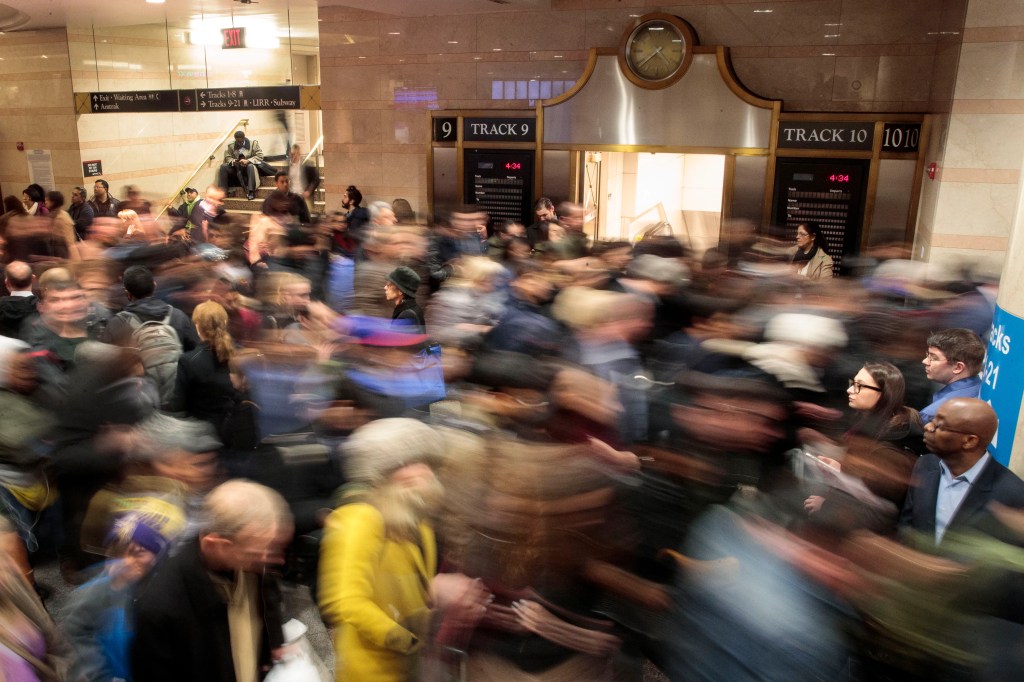
The choreography of protest works in a different way. While not all that happens can be emotionally controlled, the subjects are aware of the challenge they are posing against the authority, and are thus prepared to “stand the ground”. While violence may still ensue, and bodily steadfastness be supplanted by panic, protester are indeed seeking the tense emotion of confrontation and contraposition: it is a constituent part of the practice of protesting, and, again, one that has to be performed together.
The need to share emotions, to engage in them together, is what explains the urban nature of protesting, its carnal density. It is hardly imaginable to see protest unfolding in a rarefied space, where there is no closeness of things, and bodies are not forced to stand side by side or confront each other. While the practice of protesting can take up many forms, it is quite obvious that it ultimately needs to be at the heart of the city.
Emergent Landscapes
The final question left standing, at this point, is how a condition of landscape emerges from the urban practice of protest. We do encounter a problem here, for I believe that today, differently from the early 18th century, we cannot identify a broadly shared definition of what a landscape is. Landscape has been thematized in previous ages as a) a specific spatial condition, detached from urbanity and thus grounded in presumably “natural” territories; b) it strongly relied on the aesthetic category of the picturesque, hence alluding to a condition of natural or semi-natural beauty; c) and, in direct connection with this latter point, it presupposed a “framing view”, a fixed, visually binding point of observation. This definition of landscape was normative in the sense that some conditions would be defined as landscape if they met these criteria, while other were not.
If we were to define landscape today, we would have to take into account a broad range of spatial phenomena that are commonly considered instances of landscape, but that fall outside of a classical definition. Landscape is no longer a matter of an old-fashioned nature-culture divide, nor is it hinged to preferential viewpoints. It has become more common to refer to the ancient origin of the term paysage, which is indeed a verb form. “Paysage” represents no fixed configuration, rather an emergent situation that comes into being as the acting subject brings it to life. Landscape, thus, could be thematized as what I do in space, with the further criterion – of more recent acquisition – that what I do is intrinsically connected to my affective agenda, be this spontaneous or deliberately planned.
In this sense, categorizing landscape has become increasingly difficult. Quite often, indeed, we are confronted with landscapes whose definition widely overlaps to other, independent topological models: space, for one, especially in its existentialist, phenomenological acceptation; place, on the other side, with its direct reference to habit and affect. What is then, more specifically, a landscape?
While this question would certainly require more time to be duly articulated, we can look at the types of action and practices that are performed by human (but also non-human) subjects. Landscape is normally described as an unfolding condition, but it is also a matter of traces and sedimentation, of the accumulation of memories that remain to haunt places as their occupant forms of life wane and disappear: something that no one has described better than W.G. Sebald in his The Rings of Saturn.
I would thus like to conclude with a consideration that returns to how affects are transmitted between subjects. They can certainly “jump” from one subject to the other, by means of corporeal communication, entrainment or through a process of resonance. But perhaps there can be a form of “indirect” transmission, whereby the ambient environment becomes a medium upon which these traveling affects remain attached, linger, waiting for the next host to come along. It could be a matter of a place’s “atmosphere” – thereby intending the neo-phenomenological spatialization of feelings10 – but perhaps also of how these traces become stabilized, even when the event – in our case the protest – has faded away. We are speaking of a landscape’s temporality, but not strictly in terms of its history: rather of the way it is capable of making the pragmatic and affective dimension of human action remain ever present, resisting the contingency of situations.
Paper presented at the seminar Landscape of Protest, Department of Architecture and Design, Sapienza University of Rome, October 18, 2023.
Notes
- S. Kracauer, The Mass Ornament. Cambridge: Harvard University Press, 1995. ↩︎
- M. Scheler, Wesen und Formen der Sympathie. Bonn: Friedrich Cohen, 1923, p. 84. ↩︎
- H. Landweer, “The spatial character of atmospheres: being-affected and corporeal interactions in the context of collective feeling“, Studi di Estetica, 47, 14, 2019, p. 161. ↩︎
- T. Brennan, The Transmission of Affect. Ithaca: Cornell University Press, 2004, p. 4. ↩︎
- Brennan, The Transmission of Affect, p. 3. ↩︎
- Brennan, The Transmission of Affect, p. 9. ↩︎
- H. Schmitz, Der Leib. Berlin and Boston: De Gruyter, 2011, p. 29. ↩︎
- D. Trigg, “The role of atmosphere in shared emotion“, Emotion, Space and Society, 7, 2020, p. 1-7. ↩︎
- H. Rosa, Resonance: A Sociology of our Relationship to the World. Medford: Polity Press, 2019. ↩︎
- T. Griffero, Atmospheres: Aesthetics of Emotional Spaces. Farnham: Ashgate, 2014. ↩︎
 Questions on Architecture