Urban Atmospheres between East and West

Exploring Affect, Identity, and Mobility

Edited By Jiawen Han, Federico De Matteis

Routledge, 2026

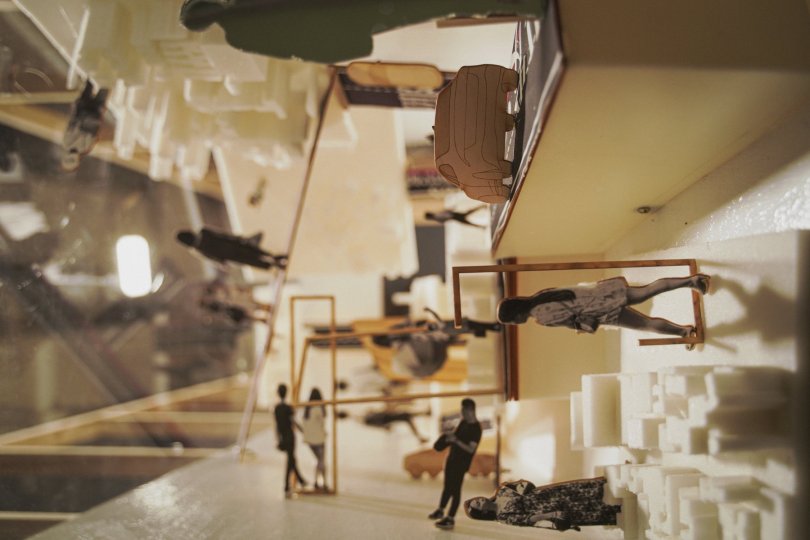
Urban atmospheres shape how we experience and understand the spaces we inhabit. Urban Atmospheres between East and West is the first collective work to explore this topic from an inter-cultural perspective, spanning diverse locations such as China, Malaysia, Japan, France, Italy, and Cyprus. This groundbreaking volume addresses the
need to foreground under-represented Eastern contexts while pairing them with resonant Western counterparts, offering a fresh lens on the dynamic interplay of culture and space.

Read More »

From Density to Intensity: Urban Materialities and the Spatiality of Feelings

In an almost legendary lecture held in 1928 at the first CIAM – Congrès Internationaux d’Architecture Moderne – held in La Sarraz, Switzerland, German architect Walter Gropius, founder of the Bauhaus, the first modern school of architecture and pioneer of rationalism in urban design, presented a seminal image, which would influence the development of global cities for decades to come.

Through a diagram endowed with a crystalline clarity, the architect expressed the value of urban density in the design of the modern city. By simplifying the space of a residential development to a linear sectional scheme, Gropius was extending the paradigm of the exact sciences to a field, that of planning, that had hitherto been governed by spontaneous growth or the artistic intuition of design. Yet in the age of “Neues Bauen” – new building, as the German architects liked to consider the architecture they were introducing to the European city – it was necessary to adopt rational tools for the control of urban space. Density was the foremost indicator, basically tabulating how much usable surface was being built for each unit of land developed.

Read More »