Affective Topographies: The Earthquake as Sacred Space

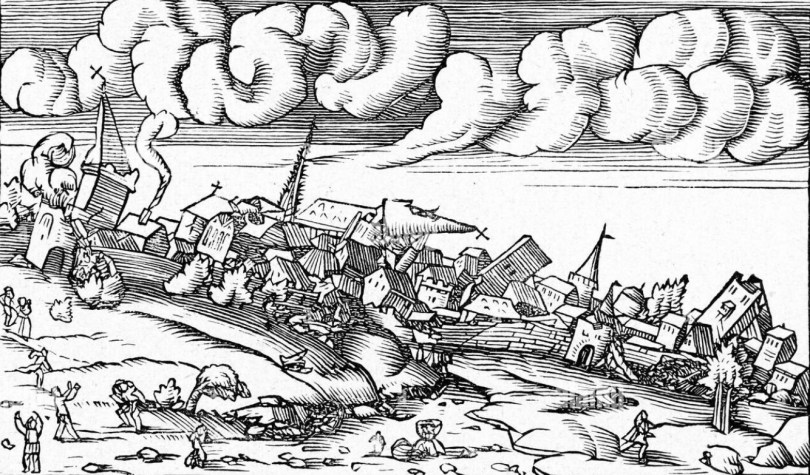
Our work explores the phenomenologies of the earthquake. However, it must be clarified that we consider the earthquake not so much as a single seismic event, of limited duration yet possessing devastating destructive power, but rather as a spatial condition which, originating from this clearly identifiable moment, then extends through time for a period that is not as easily definable. The assumption we put forward is that the earthquake is actually a space – understood, clearly, not in the sense of a geometric-physical extension – that can be inhabited and which, like all lived spaces, establishes a resonance with the subjects who encounter it. Inevitably, this resonance is conditioned by the catastrophic root of the seismic event which, even after the tremors have ended, remains permanently impressed, like a shadow that lingers even when the object that generated it is no longer present.

Read More »
Undwelling

Among the many possible definitions of affective, I refer here, following Hermann Schmitz’s approach, to the complex of dynamics that animate the felt body, including atmospheric forces such as spatially effused feelings and embodied movements as they are perceived by the subject without resorting to distal senses. It is therefore a broad spectrum, which includes but is not limited to emotions understood as instruments of response and adaptation of the organism to the environment, thus also considering what the subject shares with other bodies and subjects that occupy the same experiential space. Affective, therefore, are the relationships that are established between two or more bodies through resonance, whether these are collaborative or antagonistic: topologically articulated relationships, changing over time, both culturally and corporeally declined. On the contrary, the mere connection with the landscape established by the dynamics of dwelling is not to be understood as affective, at least not according to the definition proposed here: this is a more complex fact, based on affective dynamics of resonance, but comprising a broader canvas, composed of cultural and political threads.

Read More »