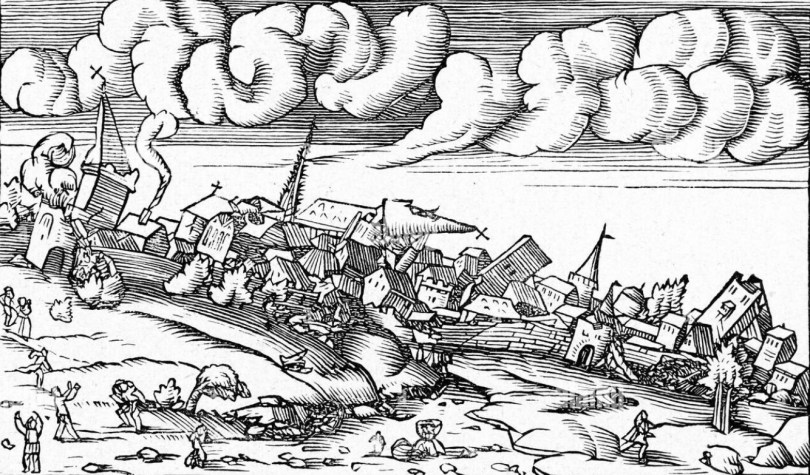
Our work explores the phenomenologies of the earthquake. However, it must be clarified that we consider the earthquake not so much as a single seismic event, of limited duration yet possessing devastating destructive power, but rather as a spatial condition which, originating from this clearly identifiable moment, then extends through time for a period that is not as easily definable. The assumption we put forward is that the earthquake is actually a space – understood, clearly, not in the sense of a geometric-physical extension – that can be inhabited and which, like all lived spaces, establishes a resonance with the subjects who encounter it. Inevitably, this resonance is conditioned by the catastrophic root of the seismic event which, even after the tremors have ended, remains permanently impressed, like a shadow that lingers even when the object that generated it is no longer present.
Defining the earthquake in this way might seem improper, since the condition of the trembling earth differs substantially from the stable quiet of the before and the after. It seems to me, however, that considering the earthquake not only as a momentary event but as a permanent condition allows us to overturn the perspective regarding the ways we inhabit the territory, how we ground our existence in the relationship with buildings, places and landscapes, how we are able to care – in a broad sense – for the spaces of dwelling. It is also about a different relationship with time, one that looks beyond the single human existence, extending the gaze to subsequent generations, to the natural processes of anthropic growth and decline, and to how these interact with non-human agents.
This, then, is the phenomenal field we intend to investigate: a territory where the compressed time of the earthquakes becomes space, marks a space, produces a trauma that inhabits living and non-living bodies, which resonate with the long, no longer perceptible, wave of vibrations. Every exploration, however, presupposes a purpose, an orientation that conditions its tools, instructs the gaze, places facts and dynamics into a taxonomy that is not objective but rather instrumental, however implicitly, to the results that are expected to emerge.
The Earthquake as Sacred Territory
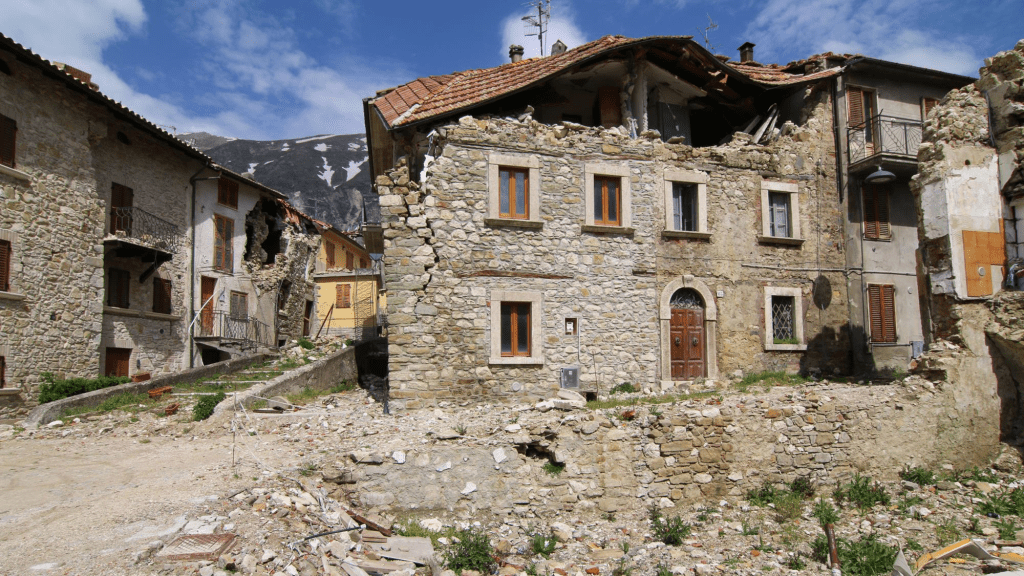
The space of the earthquake is pervaded by particular atmospheres. Not always the same atmosphere, given that the physical manifestation of the event grafts itself onto different territories, sometimes still teeming with life and activity, other times abandoned. The expressiveness of damaged or destroyed buildings shows common characteristics – collapses, deformations, scaffoldings where attempts have been made to prevent further falls, the wild growth of ruderal vegetation – which align the perception of these fractured environments according to a precise horizon. But ultimately, it is not only from these features that a common feeling re-emerges, felt where the earthquake has struck.
Perhaps what strikes us most is not what we find, but what we no longer find, which in its disappearing has left evident traces. Firstly, the abandonment of an inhabited area shows the symptoms of a past history, no longer physically present but – sometimes precisely because of this – all the more powerful in its manifestation in lived space. What we encounter is not the phenomenon of human life in its current contingency, but rather its ghost, which haunts our experience, making it (sinisterly) animated, in an unresolved dialectic between presence and absence. At every corner, at every battered door, every window without glass, from every unroofed room, we expect a figure might emerge, surprised in the almost indecent act of existing where human life is no longer foreseen, almost no longer permitted. All forms of abandonment produce this sensation: when the disappearance of life has been caused by the earthquake, the effect becomes even more powerful.
Alongside abandonment, it is precisely the earthquake-event itself that delineates the character of these landscapes. An event lasting a few instants, no longer available in the perceptual horizon, yet all the more fierce in the resonance produced on living and non-living bodies. Even if we arrive in the places struck by the catastrophe well-aware of the facts, the damage, and the rescue efforts, even when the rubble has been cleared from the streets, when the earthquake is no longer phenomenally present, what appears most evident, what produces the astonishment, is the awareness of the fact that something happened here. The event itself, in its manifestation, marks the territory irreversibly, but not only in the physical evidence that persists over time: despite its fleeting character, it turns that landscape different, special, separate: sacred.
The space of the earthquake is sacred space. No religious sense is implied by this statement, but rather the observation of an affective state, an emerging bodily condition that leads the subject crossing these places to a feeling comparable to that offered by a sacred territory. A numinous sense: that which Rudolf Otto defines as the feeling found at the heart of every religion, without having anything to do with religion in a theological sense. The sense of numinous manifests itself corporeally in a clearly defined range of movements, muscle contractions, postures, gestures, feelings: it is the recognition of these dynamics that establishes the analogical resonance between subject and territory, conferring upon the earthquake-space the expressive characteristic of the sacred. It is enough to observe ourselves as we cross those damaged landscapes: the way we move among the ruins, the boundaries of silence within which we remain, the respect felt in our posture, the circumspection of slow steps and frequent lateral eye movements. All clues converge on the expectation of presence, on the otherness of the territory marked by the event, permanently separated from the wider world surrounding it.
Pilgrimages
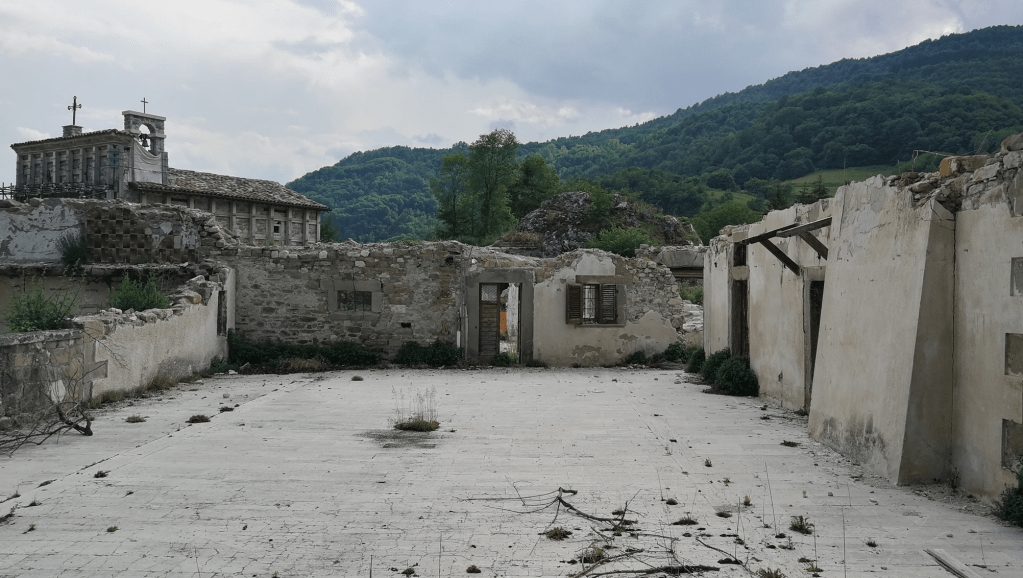
And if the atmospheric sense emerging from the damaged, fractured, abandoned territory, haunted by presences and ghosts, is sacred, then the encounter and movement undertaken by the subject becomes a form of pilgrimage. A pilgrimage requires a non-objective cartography, devoid of precise magnitude, just as, following Hermann Schmitz, we consider the space of feeling – Gefühlsraum – as a voluminous extension, yet without surfaces or edges. Equally, a cartographic form intending to describe this “soft” space must disregard canonical projections, distancing and objectifying conventions. Here, the observer’s eye is part of the map: the contours are not traced from above, but from a precise situated perspective – because perceiving is always perceiving from somewhere, from a position in the world in which we ourselves are embedded.
Hanging in the air, then, is the most urgent question: what will be the future trajectory of the earthquake space? Will it be overwritten by a completely accomplished reconstruction, by the obtuse exactitude of the “as it was, where it was” principle, an expression of a now anachronistic understanding of the concept of heritage? Or will traces of it always remain visible – at least to some extent, because while the material body of destroyed cities can be rebuilt, there is no possibility of eliminating the resonances, the deep and lasting vibrations produced by the event?
The earthquake is a gigantic catastrophe, interrupting lives and destroying cities, with a violence that – despite all good intentions – is effectively irreversible. Because the arrow of time is irreversible, and if situations recur cyclically, they do so in different forms. The aid we can offer is therefore not in the naive sense of reversing the earthquake’s destruction, making as if nothing had happened – Ungeschehenmachen, as Sigmund Freud would postulate – but rather that of gathering the testimonies of destruction where they are manifest: in the fractured landscapes, in the astonishment of the collapses, but also in the aporias of reconstructions.
The evidence of destruction is not only an evil to be eradicated, a trace that must necessarily be erased because without it we live better: it is an essential ingredient for redemption from what has occurred, the only possible path that opens the way to a future not intended as the frantic attempt to delete the effects of the earthquake. Disaster, death, in their destructive essence, have actually opened the way to a new world whose advent no one can prevent: we can, at best, only try to be prepared for its arrival.

In describing Piero della Francesca’s Resurrection, Attilio Scarpellini writes:
[…] the sleeping soldiers, exhausted from the vigil, rest their shoulders on the cold marble of the sepulcher which is a kind of stage on which the God−man proudly places his foot. […] The mystery cannot be fixed in the eyes and yet, with a reversal of perspective, it looks straight, pitilessly, into ours – where we cease to see, we see ourselves seen – and beyond them, into the barely opened horizon of the world′s future – in which we no longer are. The glorious body rises. […] Observing the blood, clotted but still alive on Jesus′s side, I recall the Hebrew notion of tikkun, [from] the Kabbalah: a redemption […] that preserves the signs and wounds of past suffering, a recomposition of the broken that does not erase its cracks, but figuratively maintains them (2020, p.95).
A concept transversal to many cultures, redemption cannot be imagined as an immaculate process, free of dross and difficulties, and perhaps, ultimately, just as Christ must die before rising, so too redemption and care presuppose the worsening of the illness and the survival of its signs even after healing.
Redemption, tikkun: the pilgrimage into the space of the earthquake is a movement that draws upon the dimension of the numinous, a form of displacement that at times assumes the characteristics of a procession, of the recursive, ritual encounter with the earthquake event, a single chronotope distributed across the territory, which in each landscape assumes a specific expressiveness. The encounter with these fragments of territory serves not for commemoration, but rather to recognize what happened – the form of space that the earthquake brought to life – and its consequences, the atmosphere emerging from the fractured or reconstructed landscape.
Mapping Wounded Cities
In a book published two years after the disastrous 2009 L’Aquila earthquake, architect Renato Rizzi offers an interesting consideration:
The tragic event never happens beyond or outside a given cognitive apparatus, and therefore a certain device of knowledge. Nature and culture are always strictly bound, for better or worse. And we, now, are in the center of technical-scientific nihilism. Therefore, distinguishing immediately between emergency and reconstruction as if they were two temporal categories paradoxically means implicitly undergoing their analytical-scientific logic. However, aware of this inevitable incongruity, the two phases should not be considered separate, but contained one within the other. […] Observing the behaviors of the two spheres, nature-culture, a strong negative analogy emerges between the sudden violence of the former and the masked and reiterated violence of the latter. […] The violence of the earthquake is unpredictable and concentrated. That of nihilism is predictable and dilated (2011, p. 18).
In these lines, which represent one of the most radical critiques of the post-earthquake reconstruction of L’Aquila – and of many other similar cases – Rizzi anticipates what today, almost two decades after the event, is evident to everyone. In the long and complex process, political, economic and technical issues have taken over, essentially excluding any consideration related to the dynamics of human space.
If we intend to enrich design practices to include the human dimension of urban experience in construction and reconstruction processes, it is necessary to develop tools that allow the recording and mapping of an affective topography of space. This requires, in other words, placing the subject at the center: describing the spatial situation of a city – or its remains – not only through technical standards developed as a form of objective measurement, but to augment them through additional tools capable of directly observing phenomena as they become manifest. These phenomenographies, understood as partial representations of lived space conditions, can perform the task of making visible and bringing into focus the emotional content embedded in the environment, something we feel but are often unable to describe.
Affective Topography: Making Phenomena Present
These spatial qualities are linked to the urban spaces we encounter: they are not strictly cultural, and therefore their effects can be found in a transversal variety of subjects. The difficulty, however, lies in their non-measurability, even when they are derived from the presence of physical objects. If we intend to capture the emotional content of space, we must accept the epistemological premise that it cannot be recorded objectively, and that every attempt at description will be partial and open to further interpretations.
Our daily experience of space is predominantly spontaneous, given that phenomena come towards us even without our deliberate intention: however, to “extract” the affective content of urban experience, it is necessary to expose oneself directly to it, with the intent of observing our bodily response at the very moment it occurs. Clearly, focused attention on our bodily dynamics, on the motions and emotional responses that emerge, can alter the subject’s feeling, as well as the attribution of meaning to the experience. However, the heuristic potential of this observational practice makes it no less robust than other methods presumed to be more objective, since we are enriching the description of reality with an additional tool: the lived body. In other words, it is an observational method that does not limit itself to describing the objects present in the environment, nor our “private” corporeality, but rather what these two entities share, as well as the way they “resonate” with each other.
The affective topography of earthquake-stricken cities is based on a process articulated in two phases: the first is based on direct observation, the second on the technical production of an illustrated map. These two phases are closely interconnected, and the second allows the first to be conducted in greater depth. The final result, understood as a non-objective mapping, should be able to make present the affective conditions that the observer encountered in their exploration of urban space.
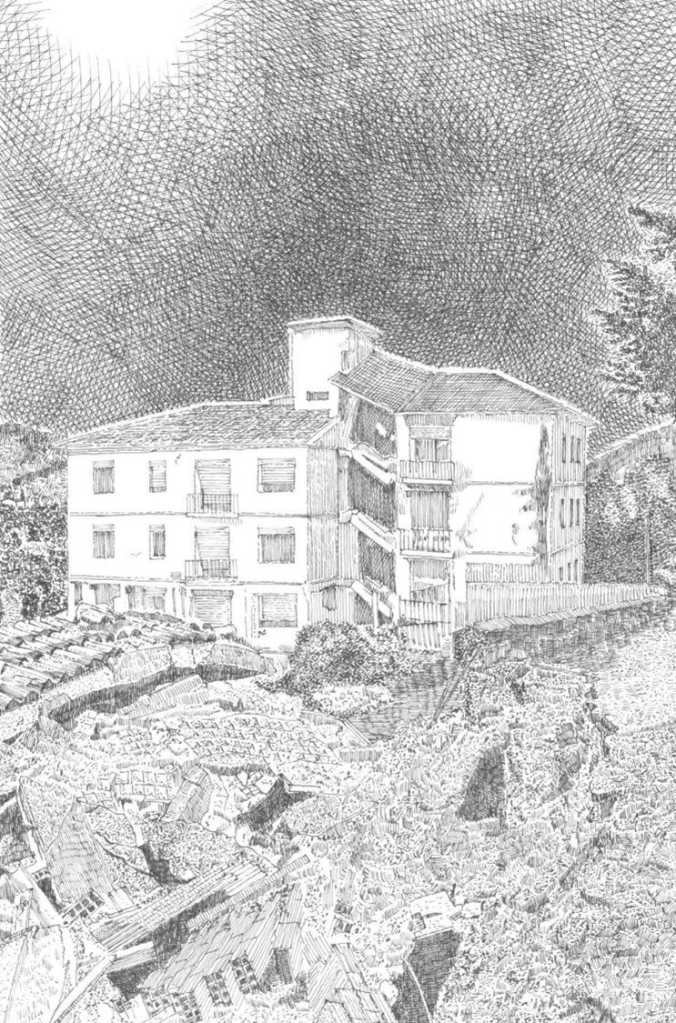
The purpose of this method is to fuse the objective, substantive description of architectural representation with the expressive tools proper to artistic practices. This does not simply mean producing “augmented” visualizations, where the qualities of urban spaces – gestures, atmospheres, and presences – are “layered” onto precise metric devices: it is rather about highlighting tensions and potential misalignments, as when the spatial presence of an architectural object drastically exceeds its physical dimension, or when an objectively perceived urban environment is “overwhelmed” by a certain atmospheric feeling.
Our exploration of the centers hit by earthquakes thus took place with these objectives in mind. Walking through various locations in central Italy, damaged by the earthquakes in 2009 and 2016, we attempted to describe the different atmospheres encountered at the moment they became manifest. Some of these locations are in the reconstruction phase or have effectively already been restored; in other cases, we walked among the ruins. Our attention was drawn, alternately, by general sensations, which changed even with the arrival of a cloud that, covering the sun, lowered the temperature and made the wind blow; by individual buildings and architectural details capable of standing out from the background, or again by human presences.
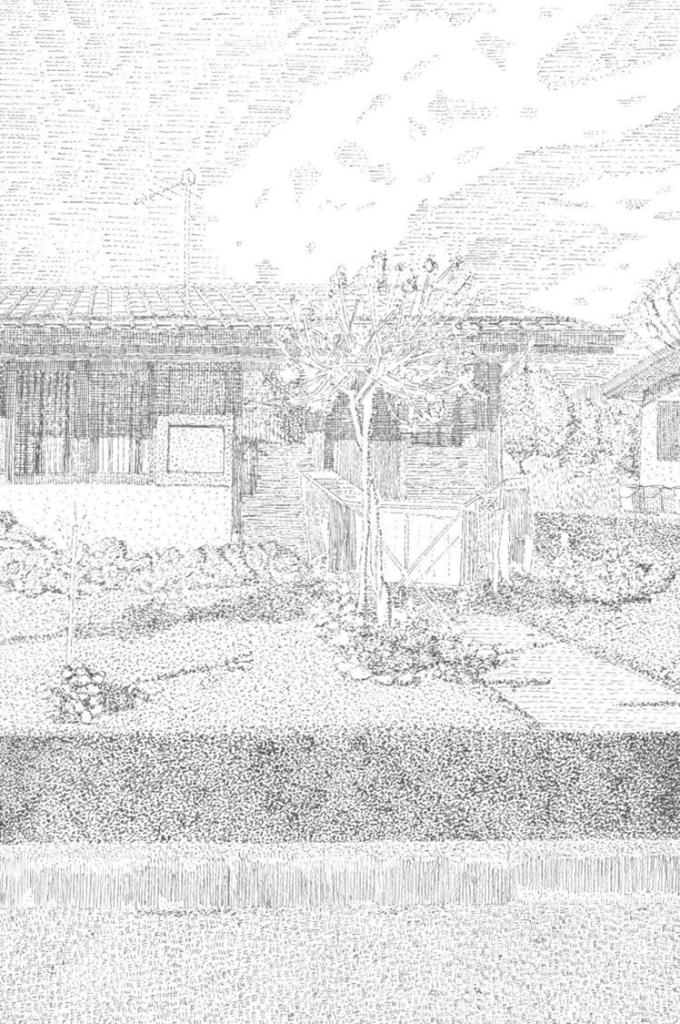
The multiple forms of urban life we encountered – displaced inhabitants in temporary housing near the destroyed villages, or others who had already repossessed the reconstructed centers – are clear testimonies of the population’s response both to the destruction and to the process of rebuilding a normal urbanity. Our affective response to their corporeality and to the spontaneous acts of symbolization implicit in dwelling practices overlaps with the observation of expressive agents embedded in the built environment, ultimately producing an extremely dense spatial experience.
Rebuilding does not simply mean placing stone upon stone again, achieving objects as similar as possible to the damaged or destroyed original: the result can be disorienting, incapable of recreating the fascination of human space. The desolation of cold ruins, paradoxically, might survive the reconstruction, radiating even from restored but lifeless buildings: an outcome which, unfortunately, we have observed far too many times.
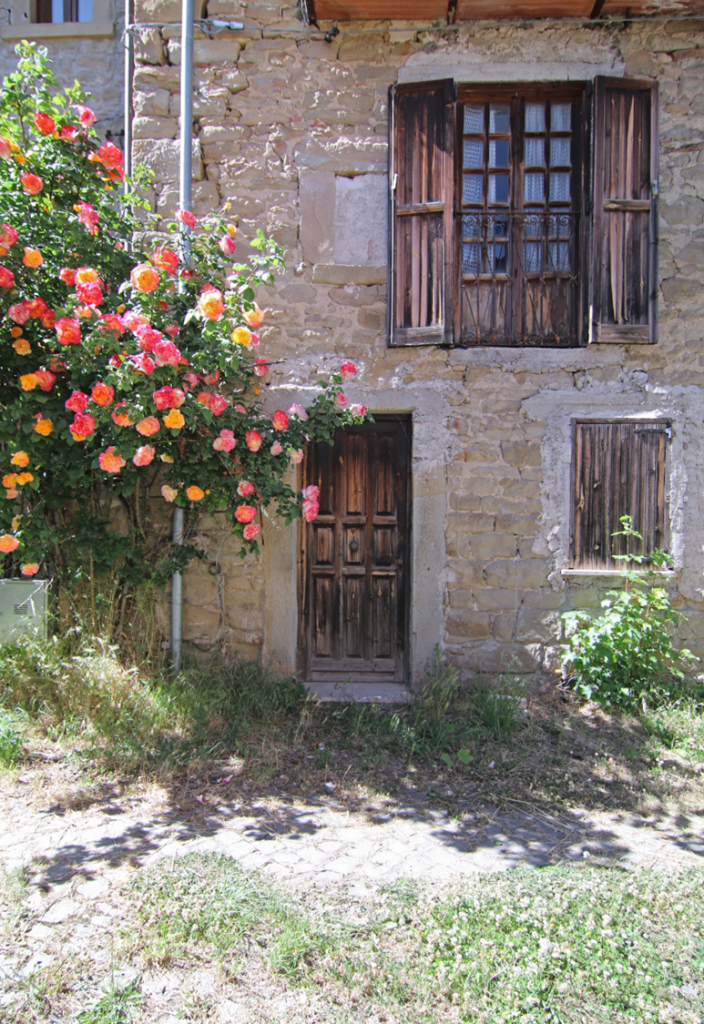
Affective topography does not offer an immediate solution, no pre-packaged shortcut. Observing the afterlife of wounded cities can bring to light a greater number of problems, new forms of awareness regarding previously ignored issues that cannot be addressed with the normal toolkits of architecture. We are speaking of a different point of view on space, a new way of looking at things that could open the way to a more sensitive process of making architecture.
Bibliography
Scarpellini, A. (2020), Il tempo sospeso delle immagini, Milan, Mimesis.
Rizzi, R. (2011), L’Aquila: S(c)isma dell’immagine, Milan, Mimesis.

