Villaggio Matteotti: una visita in questo quartiere dà conto, oggi, di un’opera ben riuscita. Nonostante la complessità della sua storia, la configurazione architettonica del quartiere resiste egregiamente al confronto con il tempo. Le condizioni di conservazione materiale, pur non eccellenti, consentono ancora di apprezzare il carattere architettonico e le qualità formali del complesso. Ma il vero metro di successo del Nuovo Matteotti si evince dalle tracce di uso e appropriazione, prova inconfutabile che la dimensione esistenziale dei residenti ha qui trovato il giusto spazio, trasformando l’architettura in un luogo domestico.
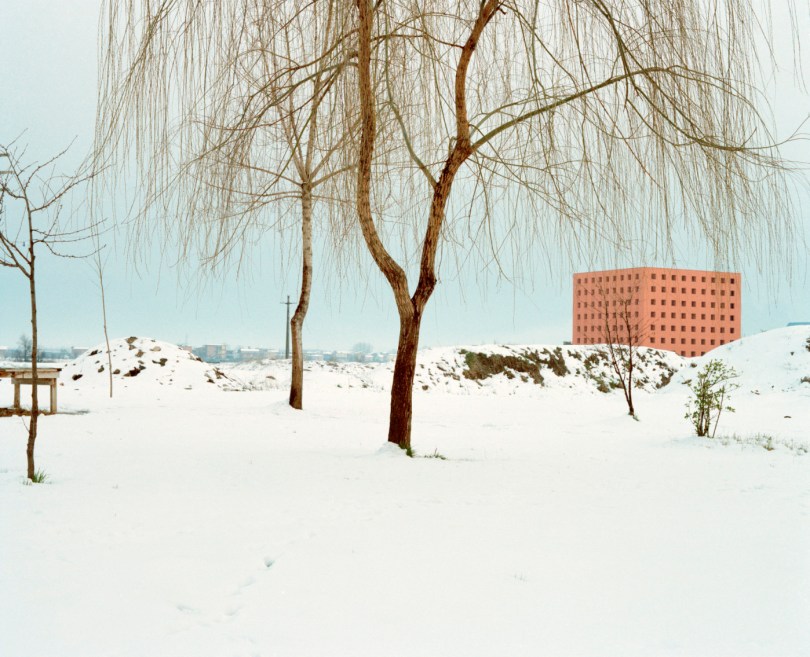
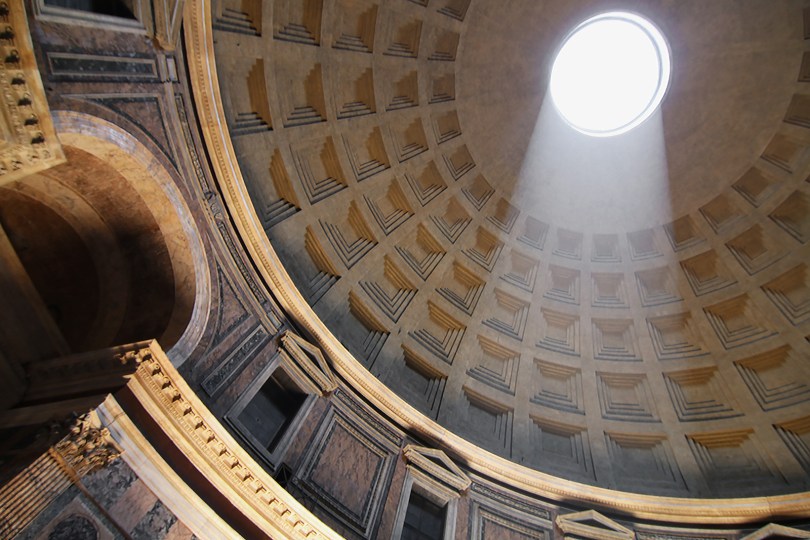
Come si fa ad “entrare in contatto” con l’architettura, che è certamente un fatto più complesso di quanto non si possa immaginare con un rapido sguardo superficiale? Come si fa, al di là delle sole questioni tecniche, a prefigurarne gli spazi, gli effetti? Perché ci affezioniamo ad alcuni luoghi, più che ad altri? Perché, quando entriamo in certi spazi, spontaneamente abbassiamo il tono della voce? Perché stiamo alla larga da alcune strade delle nostre città? Perché ogni tanto capita di avere, anche dentro casa nostra, delle sensazioni strane, quasi da sentire un brivido freddo correre lungo la schiena? Perché in alcuni luoghi torniamo con grande piacere, in altri invece non vorremmo mai più mettere piede? Perché nella memoria alcuni spazi che abbiamo vissuto nel passato rimangono incisi più profondamente di altri? Perché alcune architetture – o persino delle immagini di architetture – possono suscitare emozioni distinte ed intense, come la malinconia del cimitero di Modena nella famosa fotografia di Ghirri?
In an almost legendary lecture held in 1928 at the first CIAM – Congrès Internationaux d’Architecture Moderne – held in La Sarraz, Switzerland, German architect Walter Gropius, founder of the Bauhaus, the first modern school of architecture and pioneer of rationalism in urban design, presented a seminal image, which would influence the development of global cities for decades to come.
Through a diagram endowed with a crystalline clarity, the architect expressed the value of urban density in the design of the modern city. By simplifying the space of a residential development to a linear sectional scheme, Gropius was extending the paradigm of the exact sciences to a field, that of planning, that had hitherto been governed by spontaneous growth or the artistic intuition of design. Yet in the age of “Neues Bauen” – new building, as the German architects liked to consider the architecture they were introducing to the European city – it was necessary to adopt rational tools for the control of urban space. Density was the foremost indicator, basically tabulating how much usable surface was being built for each unit of land developed.
The sequence I’m about to show comes from one of the spin-off movies of the Harry Potter saga. I’m not a big fan of Harry Potter, but in this case, I feel there is something worth observing.
Ever since when I first watched this film, I have had the feeling that this gigantic, ominous and dark CGI creature can be a useful visual metaphor to conceptualize the spatial dynamics of affect. Emotions, as is today broadly understood across various fields of knowledge, are not the private, inner affairs of subjects, but rather spatialized forces that can “jump” from one subject to the other, capturing them and influencing their individual affective states. While they do “extend” into the ambient environment, emotions lack a precise geometrical definition, as the Harry Potter monster quite strikingly shows us. The spatial nature of emotions is not restricted to “destructive” affects such as hate or fear, but the purely incidental quality of this monster, its reckless violence and uncontrollability, creates an interesting conceptual bridge to the strong affective resonance we may encounter and experience in protests. We are observing something that resembles, albeit in a metaphorical way, that equally strange “creature” that was Sigfried Kracauer’s “revolting mass,” as he often encountered in the streets of Berlin in the years that would lead up to the rise of Nazism.1 In this short presentation, I will thus address three distinct issues: firstly, I will review some of the many theories postulating the externality of emotions, plotting how this spatial dimension unfolds within the urban environment; secondly, I will clarify how protest, as a specific urban practice, fully harnesses this spatial dimension to sustain its deployment; finally, I will discuss how a form of landscape – something akin to what has been so far here thematized as a landscape of protest – represents an emergent condition that is fueled by the interplay between urban space and human action.
“L’architettura non è fatta di soltanto di materia inerte: ospita l’esistenza umana e di essa si anima. Noi stessi risuoniamo con lo spazio che emerge dal mondo, e il nostro corpo alimenta il sentire con i suoi movimenti, le contrazioni ed espansioni sintomo degli affetti che incontriamo. Esplorare l’architettura con la lente del corpo significa scendere nella profondità dello spazio vivente, mettendo in luce l’affettività e l’atmosfera che questa è in grado di generare.”
La descrizione dello spazio architettonico e della città passa, di norma, attraverso una pratica di elencazione delle sue parti costitutive, ponendo dunque al centro dell’osservazione la dimensione materiale degli oggetti alle varie scale. Attraverso quelli che vengono comunemente considerati gli strumenti propri della disciplina, ovvero le tecniche del disegno geometrico misurato, si possono produrre rappresentazioni esatte e altamente attendibili della consistenza fisica degli oggetti architettonici. Tuttavia, questa pratica fondata nella radice della cultura moderna risulta sostanzialmente incapace di cogliere l’eccedenza cognitivamente impenetrabile dello spazio vissuto e dell’esperienza che ne fa il soggetto. Questo volume, dunque, illustra tale dimensione non misurabile attraverso la descrizione incentrata sull’esperienza diretta del soggetto che abita lo spazio. A questo scopo, il testo deriva le sue basi teoriche dall’estetica fenomenologica contemporanea, che considera il corpo vissuto quale cassa di risonanza dell’ambiente e dello spazio costruito.
This book explores the notion of affective spacein relation to architecture. It helps to understand the first-person, direct experience of the environment and how it impacts on a person’s emotional states, influencing their perception of the world around.
Affective space has become a central notion in several discussions across philosophy, geography, anthropology, architecture, etc. However, only a limited selection of its key features finds resonance in architectural and urban theory, especially the idea of atmospheres, through the work of German phenomenologist Gernot Böhme. This book thus brings to light a wider range of issues bound to lived corporeal experience. These further issues have only received little attention in architecture, where the discourse on affective space mostly remains superficial. The theory of atmospheres, in particular, is often criticized as being a surface-level, shallow one, as it is introduced in an unsystematic and fragmented fashion and a mere “easy to use” segment of what is a wider and all but impressionistic analytical method. This book therefore provides a broader outlook on the topic and creates an entry point into a hitherto underexplored field.
The book’s theoretical foundation rests on a wide range of non-architectural sources, primarily from philosophy, anthropology and the cognitive sciences, which is strengthened through cases drawn from actual architectural and urban space. These cases thus make the book more comprehensible for readers not versed in contemporary philosophical trends.
Eredità, patrimonio: termini ampi che coprono una vasta gamma di significati, moltiplicando le sfumature passando da una cultura all’altra. Sono anche legati al contesto: persino in un singolo ambito culturale, possono mutare nel passaggio da una città all’altra. Prendiamo come caso L’Aquila: se il 2019 marca il decennale del devastante terremoto del 6 aprile, come potrebbe essere inteso il senso della sua eredità? In che modo si sovrappone con quanto questo significa in altre città italiane, che non hanno vissuto lo stesso trauma? In che modo tale eredità può essere resa produttiva, per immaginare e creare la futura urbanità dell’Aquila? Read More »
“L’esperienza dello spazio è un viaggio sentimentale compiuto dal soggetto nell’abitare l’ambiente. È la cronaca del primo incontro, un istante fugace eppure dotato di ineffabile durata, capace di dare vita al nostro senso di presenza: un’esperienza affettiva, sentita nel corpo che si muove e avverte il suo stesso movimento. L’architettura, come paratesto dell’abitare umano, orienta il percorso di questo viaggio, nei modi e con gli strumenti di una più vasta dinamica del trovarsi nel mondo.”
Sin dalla fine del XIX secolo, il termine spazio ricorre costantemente nella letteratura architettonica: tuttavia, a fronte di questa centralità, la riflessione teorica in merito appare oggi inadeguata, minata da una vaghezza che la rende inapplicabile come strumento per la pratica del progetto.
Nelle scienze umane, negli ultimi venti anni si è assistito a uno spatial turn che ha investito trasversalmente la geografia umana, l’antropologia e la filosofia, con ramificazioni nelle scienze cognitive. Le ricadute di questa evoluzione culturale sull’architettura sono state occasionali e asistematiche: questo volume si pone dunque l’obiettivo di declinare tali saperi verso il progetto architettonico, tramite la descrizione di un modello di spazio che tenga conto della complessità e ricchezza dell’esperienza che il soggetto fa dell’ambiente. Al centro dell’indagine viene posta la relazione dinamica tra percezione, movimento ed emozione, basata sulla corporeità del soggetto e sulla sua risposta preriflessiva.
It is a well-known fact that modern Western culture has been obsessed with the “past” for well over three centuries. The “story of history” – if we may indulge in this calembour – is a rather long one: we could perhaps synthesize it as an urge to expand Humanity’s rational control over anything that existed, both what was physically available and what was not – because far away in either space or time. In the classical age – that period of European culture that eventually culminated in the French Enlightenment – as maps emerged as a means of describing and measuring newly discovered territories, history was intended to crystallize in a univocal and centralized way events belonging to the past, but which nevertheless were understood as still actively exerting some form of influence. No human tool is more appropriate to this end than language: Michel Foucault describes the rise of language in that period as an all-encompassing system of rationalization, capable of making the absent present:
Language gives the perpetual disruption of time the continuity of space, and it is to the degree that it analyses, articulates, and patterns presentation that it has the power to link our knowledge of things together across the dimension of time. With the advent of language, the chaotic monotony of space is fragmented, while at the same time the diversity of temporal succession is unified (p. 113).



 Questions on Architecture